Why the six months before listing matter most
Everyone focuses on the last two weeks before a home hits the market — the deep clean, the staging, the frantic touch-up list. But the work that actually moves your sale price and your stress level happens much earlier. The six months before you list are worth more than the six weeks, because they're the only window where you can do the medium-sized jobs — repaint the garage door, service the furnace, deal with the fence — on your own schedule and at a normal price, instead of paying a rush premium or disclosing them unresolved.
Starting early doesn't mean doing more. It means spreading the same list across enough time that none of it becomes a crisis. If you're even thinking about selling in the next year, this is the moment to start writing things down.
Capture what your agent and inspector flag
Most sellers get a walkthrough from their agent — often months before listing — and hear a dozen easy wins in ten minutes. Then life happens, and half of them evaporate before listing day. The fix is boring but decisive: capture each item the instant it's mentioned, before you've walked to the next room.
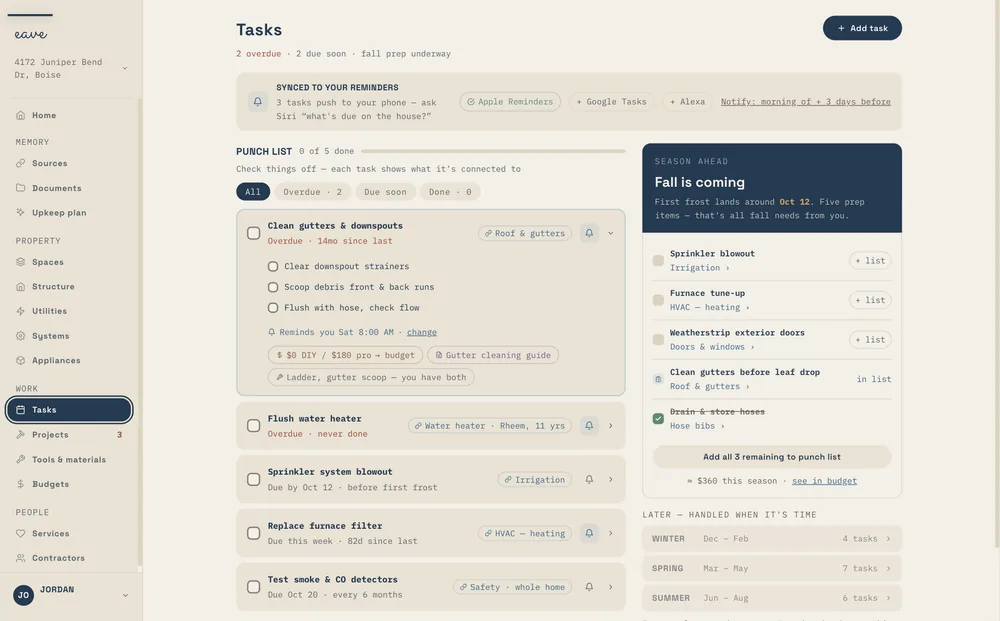
With Eave's capture, you can snap a photo or say it out loud — "regrout the guest shower," "the side gate sags" — and each note becomes a scoped project with a room, a category, and a rough cost. Nothing lives only in your memory, which is exactly where good pre-sale advice usually goes to die. When your inspector or a pre-inspection turns up more, those go in the same list too.
Prioritize by value and effort
A raw list of forty items is its own kind of paralysis. The question isn't "what's wrong?" — it's "what should I do first with the time I have?" Sort the list two ways: by the value it protects at the negotiating table, and by the effort it takes. The small, cheap, high-visibility items usually come first, because they're the ones a buyer notices and a buyer's agent lists.
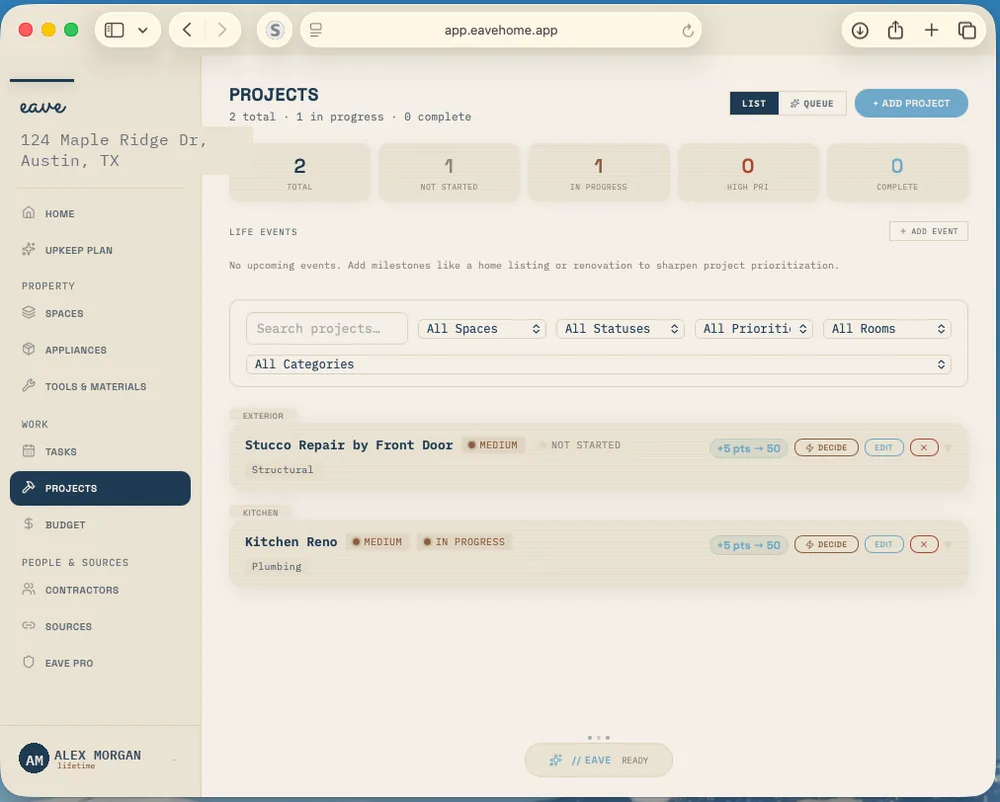
Eave Intelligence does this ranking for you, turning the pile into a plan ordered by most value and least effort for your timeline. You work down a queue instead of staring at a wall.
Should you get a pre-inspection?
A pre-listing inspection — paying for your own inspection before you list — isn't right for every sale, but it has a clear logic: it turns surprises into decisions. Instead of a buyer's inspector finding the aging water heater during the deal, when it becomes leverage, you find it early, when it's just a line item you can plan around. If you do get one, import the report into Eave and it becomes part of the same prioritized plan. (See importing an inspection report for how that works, pre-listing included.)
Hand the buyer your home's record
The last step of getting ready to sell is often the most overlooked advantage: you can hand the buyer a documented home. Your home knowledge base — the projects, the materials, the vendors, the service dates — can transfer with the sale, the same way the appliances do. A documented home reads as a cared-for home, and a cared-for home negotiates better. See passing your home's record to the buyer for what conveys and how.
Start with the one thing you already know needs fixing. Eave is free for one home and runs in any browser — your first capture takes about five seconds. See Eave for home sellers.
Start free →