What an inspection report is really telling you
Still choosing between houses? Eave for Buyers reads a pre-inspection into findings while you are still deciding, and compares the houses on what they will really cost. This guide picks up once you have one under contract. A home inspection report reads like a list of everything wrong with the house, and that's how most buyers experience it — as a wall of anxiety delivered at the worst possible moment, mid-deal. But re-read at your own pace, it's something more useful: the most complete condition assessment your home will ever get, written by a professional who spent hours looking at things you'll never climb up to see.

The report isn't a verdict. It's an inventory — of systems, ages, and conditions — that becomes a to-do list the moment you decide to treat it as one. The problem is that it usually gets skimmed once and filed, and two years later you're rediscovering, at full price, everything it already told you.
Urgent vs. soon vs. someday
Not every finding deserves the same reaction. The skill is triage. Three buckets do most of the work:
- Urgent — safety and active damage: the double-tapped breaker, the water actively getting in, the gas issue. These are the ones you handle first, sometimes before you even move in.
- Soon — aging systems with real remaining life but a visible clock: the 14-year-old water heater, the roof with a few seasons left. Not emergencies, but not "ignore," either. These get planned and budgeted.
- Someday — cosmetic and low-consequence items: the sticking window, the cracked driveway. Real, worth noting, but they don't drive decisions.
Sorting the report this way turns forty scattered findings into three manageable lists — and tells you where your attention (and money) should go first.
Putting rough costs to it
A finding without a number is hard to act on. "The furnace is near end of life" means one thing at a $400 repair and another at a $6,000 replacement. Attaching a rough cost to each item — even a wide range — is what turns the report from a source of dread into a plan you can budget against. It's also how you understand the real cost of ownership before you sign, so the surprises don't become regrets.
When you import your report into Eave, it sorts findings into urgent, soon, and someday and attaches rough costs automatically — the triage and the budgeting, done for you. See importing an inspection report for the steps.
From report to reminders
The last mile is the one everyone skips: turning a static plan into something that actually resurfaces at the right time. A "soon" water heater does you no good if the note is buried in a PDF you never reopen. The point of an upkeep plan is that it comes back to you — a reminder before the warranty lapses, a nudge when the roof's clock runs down, a task queued for the season it makes sense in.
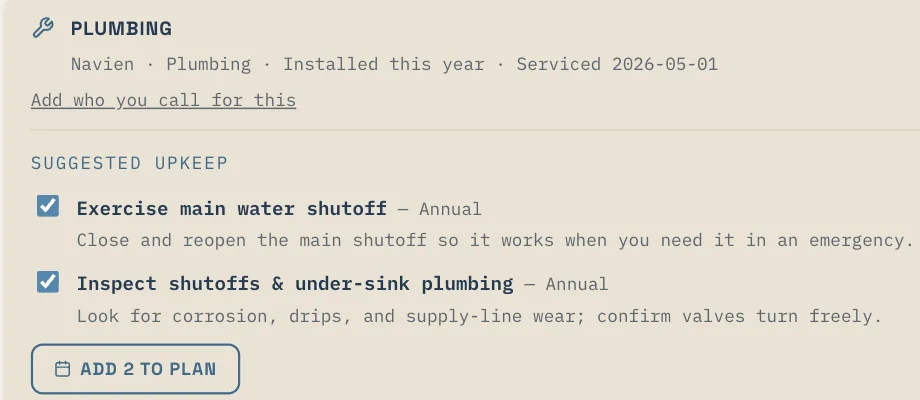
That's what Eave Intelligence does with your imported report: it becomes a living 12-month plan and a ranked queue, so the inspection keeps working for you long after closing instead of gathering dust. Your new home starts with its systems, ages, and to-dos already in place — day one, not year two.
Start with your inspection report. Eave is free for one home and runs in any browser — import the report and watch it become a plan. See Eave for home buyers.
Start free →